
The Smaller Side of Things
It’s the little things, right?
It’s that time of year in the season where our crops reach heights in which we can hide in. But, we are too busy to be caught napping under plants. Our days are filled with bountiful harvests, planting, and tending those luscious crops soon to be gobbled up by the souls who keep this farm tractorin’ along…you!
Alongside a bustling crew, hawks glide through the skies peering down for a tasty treat, parasitic wasps weave through crops, laying eggs inside pests who will then be devoured from within, lacewing larvae munch away on aphids, and many more relatives buzz along on these sweet summer days. We appreciate all these partnerships and it’s time to look deeper.
The soil beneath our feet is swimming with an incredible diversity of, arguably, the cutest critters you will ever see. Rotifers, with their vacuum-like mouths, suck in bacteria as they graze the micro-terrain. Naked amoebae blob along completely engulfing their prey. Flagellates swim past so fast you’d think they have a distaste for fame. Bacteria are plentiful and needed to help maintain a healthy soil food web because it’s what so many of our beneficials micro-helpers eat, including the above mentioned.
When the soil food web is balanced, crops tend to be more nutrient dense, have a stronger defense against pests, and taste better! As a result, it’s beneficial to invite in the bacterial feeding nematodes that help release nitrogen tied up in bacteria that then feeds our plants. We call in the beneficial fungal partners that form mycorrhizal relationships and sync with plant roots, allowing them to access nutrients deeper in the soil and give cheers to the endophytic fungi strengthening plants within their tissues!
Oooh, there is an entire banquet of knowledge to feast on, so let’s continue to nerd out another time. For now, please thank the soil microbes that give us unwavering support in the darkness of a thriving soil food web.\
~Ali
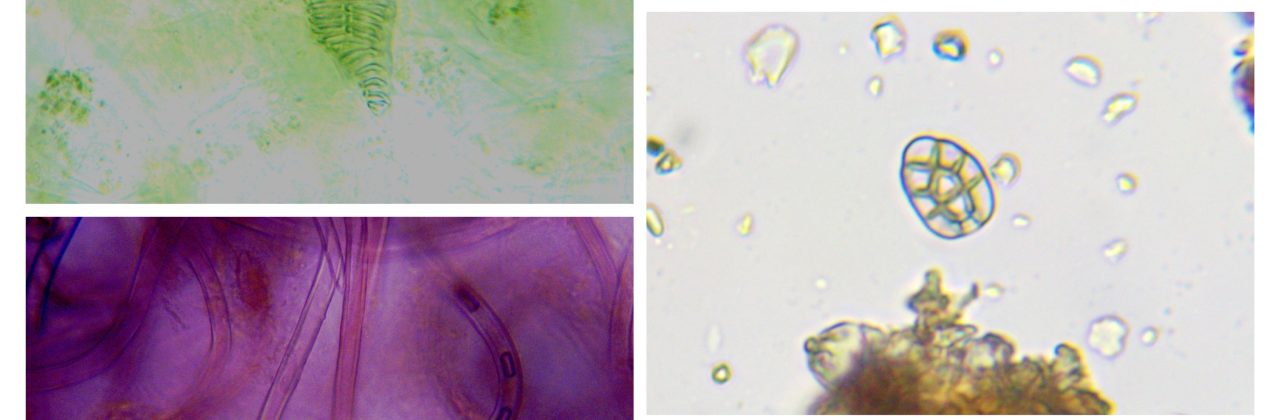
Red Dog Farm Samples, 400x, Captured by crew member Ali
Top Left: Cellulose from Mini Cucumber, Bottom Left: Inside a Raspberry, Top Right: Bacterial Feeding Nematode, Middle Right: Fungal Spore (But it totally looks like a turtle shell, no?), Bottom Right: Cellulose from Mini Cucumber, so cool!